Driving HPC Forward
Automating HPC Infrastructure
Nizar8 min read
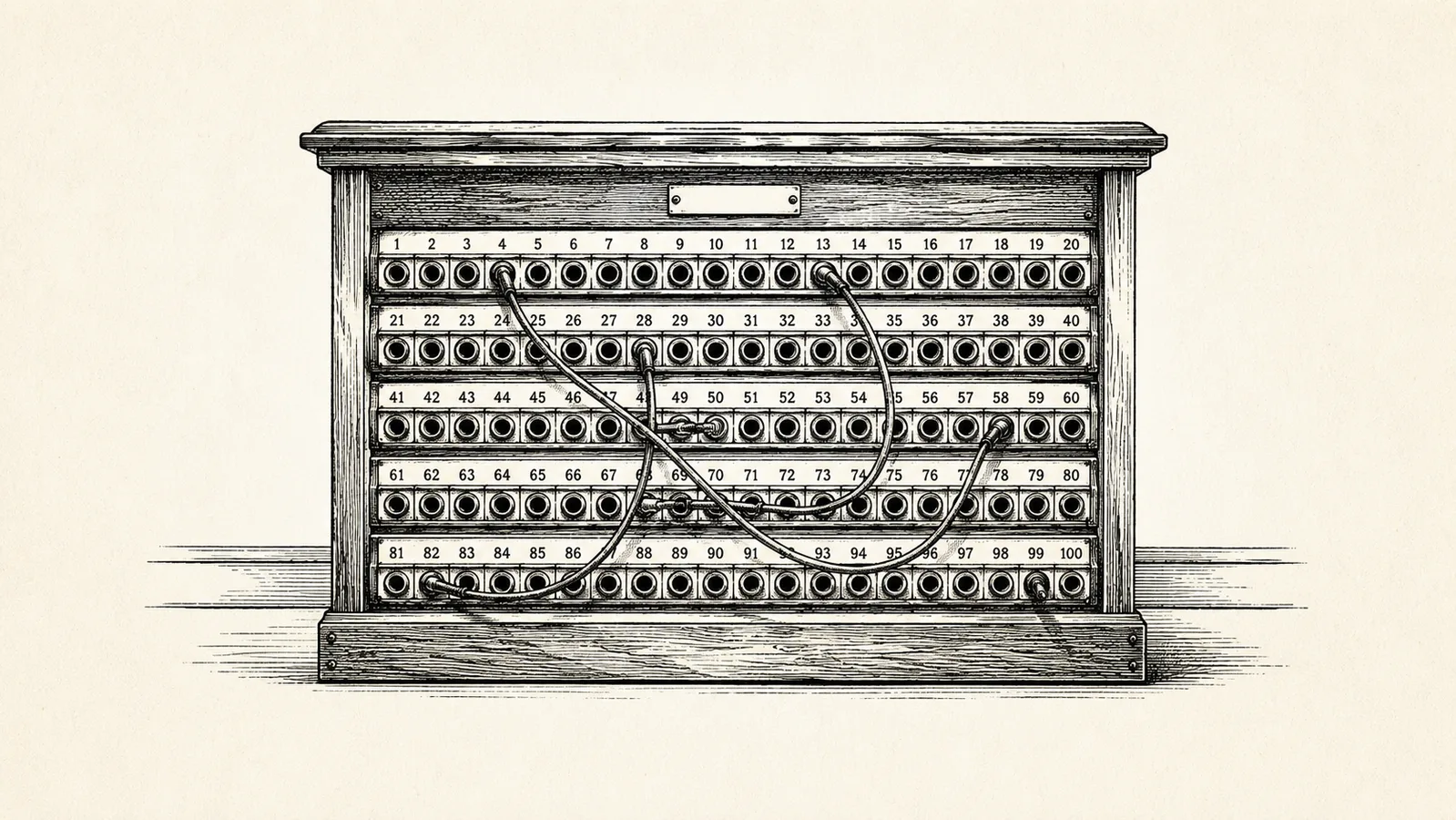
Traditional High-Performance Computing (HPC) environments are often difficult to manage. They are usually built as static clusters where hardware is physically locked to specific projects or teams. This creates "silos" where expensive servers sit idle in one rack while another team is waiting in a long queue for resources.
Changing these setups is slow. If a researcher needs a different operating system or a specific driver version, the IT team has to manually reinstall servers or reconfigure the network. This lack of flexibility makes it hard to keep up with the changing needs of modern workloads like AI or chip design.
The goal is to move away from this manual, rigid approach. The solution requires an infrastructure flexible enough to adapt to the users, rather than forcing users to adapt to the hardware.
The Orchestration Layer: Apache CloudStack
To achieve this flexibility, the physical infrastructure requires a management layer that abstracts the hardware complexity. Apache CloudStack is an open-source software platform designed specifically for this purpose. It orchestrates the underlying compute, networking, and storage resources, effectively transforming a traditional data center into an elastic cloud environment capable of running on-premise.
At its core, CloudStack serves as a centralized control plane. It manages the hypervisors—such as KVM, VMware, or XCP-ng—that run on the physical servers. Instead of interacting with individual machines, administrators interact with the CloudStack management server, which handles the logic of where to place workloads and how to configure the underlying hardware.
This architecture introduces several fundamental capabilities to the environment:
- Resource Abstraction: It treats the entire data center as a single pool of capacity. A user or process requests a specific amount of CPU and RAM, and the platform locates the best available physical host to run it.
- Multi-Tenancy and Isolation: It allows the infrastructure to be logically divided. Multiple projects can operate simultaneously on the same hardware, separated by strict software-defined boundaries.
- Network Automation: It manages the networking stack, automatically configuring Virtual Private Clouds (VPCs), firewalls, and routing tables. This removes the dependency on manual network provisioning for every new cluster configuration.
By implementing this layer, the infrastructure becomes programmable. The hardware is no longer a collection of static servers; it is a dynamic resource pool that can be manipulated through a unified API.
The DevOps Toolkit
While CloudStack provides the API to manage the infrastructure, interacting with raw HTTP requests is rarely efficient for daily operations or automation scripts. To effectively bridge the gap between the infrastructure and the workload managers, specific tools are utilized to translate intent into action.
Command Line Control: CloudMonkey
For scenarios requiring immediate, scriptable interaction with the cloud, CloudMonkey (cmk) serves as the command-line interface. It functions as a wrapper for the CloudStack API, allowing administrators to execute any action available in the web UI directly from a terminal.
The tool operates in two distinct modes. In interactive mode, it provides a shell-like environment with auto-completion, useful for testing commands or manual administration. In non-interactive mode, it becomes a powerful utility for automation. It can process single commands and return output in machine-readable formats like JSON. This capability allows external scripts—such as a trigger from a job scheduler—to programmatically query the state of the cloud or request the deployment of a new virtual machine without human oversight.
Infrastructure as Code: Terraform
While CloudMonkey handles imperative, on-the-fly commands, maintaining the foundational structure of the environment benefits from a declarative approach. Terraform provides a framework for "Infrastructure as Code," allowing the environment's architecture to be defined in configuration files rather than manual settings.
In this setup, Terraform is often responsible for defining the base layers of the cluster. This includes the Service Offerings (defining specific CPU/RAM combinations), the network topologies, and firewall rules. By defining these resources as code, the infrastructure becomes reproducible. If a new isolated cluster is needed for a separate department, the existing configuration can be reused to deploy an identical network and security posture, ensuring consistency across the data center.
Implementing Slurm on Demand
With the infrastructure platform and the necessary tools in place, it becomes possible to construct a dynamic workflow. In this model, the workload manager—commonly Slurm in many HPC environments—drives the infrastructure, expanding the cluster resources only when jobs are waiting in the queue.
The Foundation: Golden Templates
The process begins with the base image. In a virtualized environment, the traditional PXE boot process is often replaced or augmented by the use of Templates.
A template acts as the master copy of the operating system. It is pre-configured with the necessary kernel versions, Infiniband drivers, and libraries required for the specific workload. Unlike bare-metal imaging, which can take significant time to deploy, a virtual machine generated from a template can be instantiated in seconds. By maintaining these distinct templates, administrators can ensure that a simulation requiring an older OS version and a deep-learning job requiring the latest CUDA drivers can leverage the same physical hardware without conflict.
The Trigger: Connecting the Queue to the Cloud
The core of this dynamic setup lies in the communication between the workload scheduler and CloudStack. Slurm includes native "Power Save" logic, originally designed to power down physical nodes to save electricity. This logic can be repurposed to manage virtual lifecycles.
Instead of sending IPMI commands to a physical server, Slurm is configured to execute scripts that utilize CloudMonkey. When the scheduler detects pending jobs in the queue, it triggers a "Resume" script. This script sends a command via CloudMonkey to CloudStack, requesting the deployment of new virtual machines based on the required Golden Template. Conversely, when nodes sit idle for a defined period, a "Suspend" script triggers the destruction of those virtual machines, returning the compute resources to the global pool.
Automated Configuration
Once a node is provisioned, it must be integrated into the cluster before it can accept jobs. While the Golden Template provides the OS and drivers, the dynamic nature of the environment requires last-mile configuration.
Configuration management tools, such as Ansible, handle this final step. As the virtual machine boots, it triggers a playbook to perform the necessary integrations. This typically involves mounting high-performance storage systems (like NFS or Lustre), synchronizing user accounts and UIDs, and configuring the Slurm daemon. Once these steps are complete, the node reports its status back to the controller, effectively telling Slurm that it is ready to work.
Optimizing Performance and Reliability
While dynamic scaling addresses the issue of resource availability, HPC workloads often have strict requirements regarding physical hardware placement and access to accelerators. To bridge the gap between virtual flexibility and bare-metal performance, the orchestration layer utilizes specific features to control how virtual machines interact with the physical hosts.
Controlling Placement with Affinity Groups
In a standard cloud environment, the user rarely cares which physical server hosts their virtual machine. In HPC, however, physical location matters significantly. Affinity Groups provide the mechanism to define these placement rules.
For critical infrastructure, such as the Slurm controller or head nodes, Anti-Affinity rules ensure reliability. These rules dictate that specific virtual machines must never run on the same physical host. If one physical server fails, the redundancy of the control plane is preserved because the backup node is guaranteed to be running elsewhere.
Conversely, for tightly coupled simulations that rely on Message Passing Interface (MPI), Affinity rules are utilized to group virtual machines together. These rules guide the orchestrator to place a set of worker nodes onto the same physical host or within the same rack. This minimizes network latency between the nodes, ensuring that the communication speed between processes remains high, mimicking the behavior of a bare-metal cluster.
Accessing Accelerators via PCI Passthrough
Modern HPC workloads, particularly in AI and molecular dynamics, increasingly rely on specialized hardware like GPUs or FPGAs. Historically, virtualization was seen as a barrier to these workloads due to the overhead introduced by the hypervisor.
To address this, the infrastructure utilizes PCI Passthrough. This feature allows the orchestration layer to bypass the virtualization abstraction for specific hardware components. A physical GPU installed in the host server can be directly assigned to a specific virtual machine.
From the perspective of the operating system inside the VM, the device appears as if it were physically connected. This allows the workload to utilize native drivers (such as NVIDIA CUDA) and access the hardware with near-native performance. This capability allows the same cloud infrastructure to host generic CPU-based tasks and high-performance AI training jobs without requiring separate, dedicated physical clusters.
The Result: A Breathing Cluster
By integrating an orchestration layer like CloudStack with a workload manager like Slurm, the fundamental nature of the computing cluster changes. It transitions from a static set of assigned hardware to a fluid, elastic resource.
In this modernized environment, the infrastructure effectively "breathes." When researchers submit a massive regression test, the cluster automatically expands, consuming available physical resources to meet the demand. Once the queue empties, those virtual resources are destroyed, returning the compute power to the global pool.
This elasticity eliminates the historical inefficiency of hardware silos. A high-memory server is no longer locked away for a single project that only uses it occasionally. Instead, that same physical machine can host a massive synthesis job on Tuesday and be repurposed to run a hundred small simulation nodes on Wednesday. The infrastructure adapts to the workload in real-time, maximizing the return on investment for every piece of hardware in the data center.
Conclusion
The convergence of High-Performance Computing and cloud methodologies represents a significant shift in how scientific infrastructure is delivered. By applying concepts like Infrastructure as Code and automated orchestration, IT teams can move away from manual hardware administration and focus on enabling research.
This approach brings the agility of modern DevOps to the rigorous world of scientific computing. It provides engineers and scientists with the customized, isolated environments they require without the bottlenecks of traditional provisioning. Ultimately, modernizing HPC is not just about updating software; it is about building an infrastructure that is as dynamic and innovative as the problems it is solving.